

What Behavior Causes An Animal To Be Inactive
How is an brute'south internal life (i.east., its physiology and anatomy) integrated with its behavior? Sensory systems provide information from exterior the animal that, when integrated, shape beliefs. Internal senses, such as hunger or fearfulness, impact behavioral priorities. Motivation describes how animals make choices amid possible behaviors, based on the force of internal needs and sensory inputs.
Behavior: Integrating an Animal's Internal and External Globe
How exercise animals brand decisions? Why does a dog, sleeping quietly, become up and search for food, a companion, or ask to be permit out of the house? Perceptions of the external world — hearing, vision, smell, and then on — provide data that lead to behavioral changes. Perceptions of the internal world, including hunger, appetite for sex activity, fear, pain, and the like, provide immediate motivations for behavior. Animals integrate these external and internal inputs to set their behavioral priorities.
Sensing the World
Sensory structures, such as eyes and ears, take data from the surround and convert it into internal signals that the animal can apply in shaping its behavior. Transduction is the process of converting external energy, such as low-cal waves, electric fields, or vibrations in the air into a nervous signal, or action potential. An activity potential is an electric signal that carries data from the sensory organ to the brain via the nervous organization. Any imaginable feature of the environment is bailiwick to perception, though non uniformly amid all creatures. Evolution tunes whatsoever species' perceptual world to the information available in its habitat. Weakly electrical fish, for example, inhabit murky water in which vision is not constructive; they navigate and communicate using magnetoreceptors.
Visual perception serves every bit a good example of a sensory arrangement. Receptive cells for vision incorporate a pigment — in most animals, the paint is composed of retinal (derived from vitamin A) and a protein, opsin. Retinal and opsin together form rhodopsin. When low-cal energy (i.due east., photons), hits a rhodopsin molecule, the shape of the molecule is altered, triggering a succession of metabolic changes leading to an activeness potential that transmits the information to the nervous system. When grouped together, paint containing cells form an eye, an organ that frequently possesses a lens to focus low-cal on the photoreceptive cells.
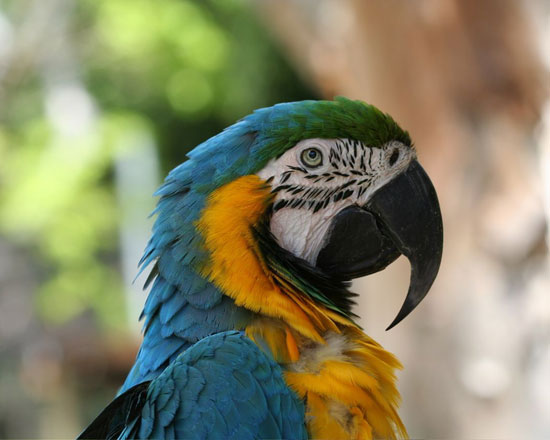
Effigy 1: Color vision requires receptors that are sensitive to relatively narrow ranges of light wavelengths.
Animals which utilise color as signals, such equally this macaw, have well-developed colour vision.
© 2010 Nature Education Courtesy of Jeff Mitton. All rights reserved. 
Some visual pigments respond to a wide range of lite frequencies (from ultraviolet to infrared), giving the animate being high sensitivity to light and monochromatic (black and white) vision. Other types of visual pigments respond to narrower ranges of light frequency; these typically provide lower light sensitivity, but open the possibility for colour vision. Nocturnal animals tend to take monochromatic vision then they tin take total reward of low light levels. Diurnal animals, such every bit humans and honeybees, can have trichromatic vision (three primary colors that stand for to iii different color-responsive pigments). Some animals, such as the Asian Xanthous Swallowtail butterfly, can detect equally many as five dissimilar primary colors (Effigy 1).
Animals integrate visual information from just a few to hundreds of thousands of light receptive cells. Some animals form images of their world, while others have visual systems centered more effectually the detection of movement and/or edges. Remembering and interpreting visual images requires sophisticated key neural processing, and specific brain regions are devoted to this activity in both invertebrates and vertebrates.
The Nervous Organization and Behavior
Uncomplicated animals, like sea jellies, have direct neural connections between sensory cells and muscles, then that their pond motion can modify as needed. More complex animals have central nervous systems and a brain that integrates a variety of sensory inputs. The concentration of the coordinating parts of the nervous system and some of the sensory systems in the anterior part of an fauna'due south body is called cephalization. Specialized functions, like learning and memory, coordination of movement, and regulation of physiological functions are performed in different regions of the brain, and neural connections within the brain allow the transfer of data amidst these regions. Neurotransmitters, modest molecules such as acetylcholine, serotonin, and dopamine, transmit data amidst brain cells. Overall levels of neurostransmitters in the brain also touch on full general behavior; manipulation of dopamine, for example, affects wakefulness.
The Endocrine Arrangement and Behavior
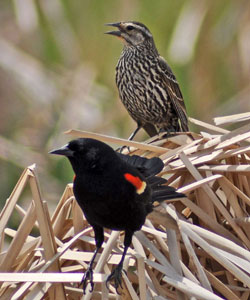
Figure 2: Pair bonding and aggression are both influenced past hormones.
These Red-Winged Blackbirds have bonded and volition nest; the male remains very aggressive and chases other males from its territory.
© 2010 Nature Teaching Courtesy of Michael Brood. All rights reserved.
The endocrine arrangement is a arrangement of glands and organs that secrete hormones into the bloodstream to regulate behavioral responses, seasonal changes in beliefs, mating, and parental care. This is truthful in both vertebrates and invertebrates.
The steroid hormones testosterone and estrogen regulate development of the reproductive system in males and females, besides equally the expression of secondary sexual characteristics such as sexual behavior, territoriality, and assailment. The ovaries and testes of vertebrates produce these hormones. Metabolically, estrogen is derived from testosterone, and both hormones are important in shaping female beliefs. Simple manipulations, such equally removal of the gonads, demonstrate the behavioral importance of estrogen and testosterone. Castrated males — a common practice in the husbandry of dogs, horses and cattle — are less aggressive and more manageable than intact males. Age of castration is important, every bit in one case a behavior has developed, removal of the hormone has less issue. Addition of testosterone increases aggression and territoriality. Oxytocin and vasopressin are neurohormones that regulate pair-bonding, a stiff connection that develops between males and females of a species, and some aspects of parental care. Neurohormones are produced and released past neurons. These neurohormones are produced in the hypothalamus and secreted from the pituitary. Prolactin, likewise a product of the hypothalamus, physiologically and behaviorally prepares females for nursing, and stimulates parental care, specially nesting, in both sexes (Effigy 2).
An integrated picture of hormonal regulation of behavior in invertebrates has not notwithstanding emerged. Juvenile hormone regulates egg production in almost all insects and mating behavior in at least some insects. In some social insects, such as the honeybee, juvenile hormone plays an important office in determining which activities a worker performs in the colony. Vitellogenin, a protein stored in eggs for nutrition of the developing embryo, may also impact hormones that determine the age bees perform specific tasks. Ecdysone, or molting hormone, may also have behavioral furnishings on insects and crustacea, although these have not been besides-investigated. In contrast to insects, bag cell hormones command egg-laying behavior in mollusks.
Appetites
Appetites — perceptions of need — commonly link directly to physiological control systems and fall into a general category called behavioral homeostasis. Homeostasis is the tendency for an organism to maintain internal equilibrium. Hunger, thirst, the need for sleep, and the need to regulate body temperature, all drive of import behaviors. Animals forage for food to run into their caloric requirements and to obtain macro-, and micro-, nutrients necessary for sustaining life. Foraging beliefs typically involves inherent risks, because an animal must often move from a sheltered or protected location to find food. Not surprisingly, predators can cue-in on routes used for foraging or on nutrient items. The physiological perception of the need for nutrient balances with the possible risks involved in foraging. These aforementioned factors affect the search for water.
Vertebrates demand to sleep. Although the reasons for sleeping are not well understood, at that place are two hypothesized adaptive functions for sleep. Outset, it allows a period of brain activity that allows for neural repair and retention consolidation. Second, sleep in a protected location removes an animal from predation risk. Some birds and mammals literally "sleep with i heart open;" one hemisphere of the brain enters a sleep state, while the other remains alert. Sleep is linked to an animate being'southward circadian clock; agile and inactive states are timed internally using a physiological machinery that cycles approximately each 24 hour. The circadian clock is set by exposure to natural (sun, moon) light cycles, and regulated by hormones similar melatonin.
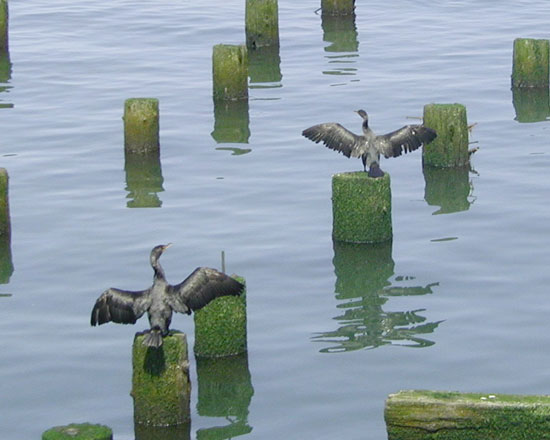
Figure 3: Behavioral thermoregulation in cormorants
Many birds spread their wings to do good from solar heating. Behavioral thermoregulation helps animals to maintain favorable body temperatures without expending metabolic energy.
© 2010 Nature Instruction Courtesy of Michael Brood. All rights reserved.
Behavioral thermoregulation is important for both ectotherms and endotherms. Ectotherms may seek sunny locations in which to relish; this warms their body fluids and tissues, allowing for freer muscular movements and faster metabolic processes, such as digestion. Conversely, they seek shade when overheated. Endotherms deed in much the same way. Fifty-fifty though they can produce heat internally, and regulate their body temperature physiologically, rut product requires a large corporeality of energy, and birds and mammals savour to salve caloric expenditures (Figure 3).
These examples illustrate how behavioral homeostasis determines much of an animal's activities. Behavior gives animals the flexibility to respond to changing environmental conditions and to move about in their habitat to find resources that are essential for survival.
Pain
Pain (nociception) is a subjective characterization of sensation associated with physical impairment to the body. The perception of hurting is protective; it provides feedback that allows the avoidance of further injury or of dangerous situations. Ascertainment of responses of mammals and birds to physical injury suggests a commonality of hurting perception amidst these organisms; all vertebrates share the physiological pathways for response to physical damage to their torso. The potential for the perception of pain in invertebrates is more difficult to assess. Diverse invertebrates, such as insects, crustacea, and mollusks withdraw or groom in response to experimental stimuli thought to crusade physical discomfort such as balmy electric shocks or weak acids. Because pain is a subjective descriptor based on human experience, information technology is hard to know if the sensation is the same for all animals, merely clearly substantial similarities exist in many animals for objectively measured responses to noxious stimuli.
Indecision and Stress
What happens when an creature is faced with conflicting behavioral needs, or is placed in a circumstance where it cannot limited the behavior it is motivated to perform? Under natural or relatively unrestrained weather, animals oft perform deportation beliefs when they become agitated — grooming is a typical deportation action. This is easily observable in humans, who adapt their hair or brand other grooming movements in socially uncertain situations.
In captivity, the inability to express natural beliefs can atomic number 82 to behavioral pathologies, such equally repetitive pacing or training, to the point that it causes concrete damage. Birds and mammals under behavioral stress may come to exhibit symptoms like to obsessive-compulsive disorder in humans. They ofttimes pull out their feathers or fur, footstep, or groom constantly. Animals, particularly carnivores and primates, respond positively to habitats that are relatively complex, or to challenges in nutrient discovery. Modernistic zoos, conservation/rehabilitation centers, and brute parks, employ both of these techniques to prevent the manifestation of stress behaviors. Medications adult for use in humans to treat anxiety and depression as well sometimes help to curb behaviors like manus-licking in dogs and feather plucking in birds.
Motivation: How Animals Set Behavioral Priorities
An beast may be hungry and hot at the aforementioned time, or may demand to slumber, but also exist driven to search for a mate. Focusing on i activity at a time usually results in more success than attempting to simultaneously reach multiple, perchance alien, goals. In analyses of behavioral choices made by animals, some outcomes are fairly obvious; grooming is often given a lower priority than other behaviors, and takes place during what otherwise might be periods of inactivity. How animals make decisions amongst more compelling drives, such as foraging and mating, is less well understood, although often mating and parenting trump other activities, and so that during mating season, or while nurturing young, an adult volition deplete their nutritional reserves. Hereafter research focusing on the neuroscience of competing behavioral needs volition provide insight into the mechanisms animals employ to prioritize their activities.
This content is currently under structure.
Topic rooms within Fauna Behavior
Close
No topic rooms are there.

- | Lead Editor: Sara Tenney
Source: https://www.nature.com/scitable/knowledge/library/what-functions-of-living-systems-underlie-behavior-13883114/
Posted by: kittrellkitn1938.blogspot.com
0 Response to "What Behavior Causes An Animal To Be Inactive"
Post a Comment