

Is Lichens A Plant Or A Animal
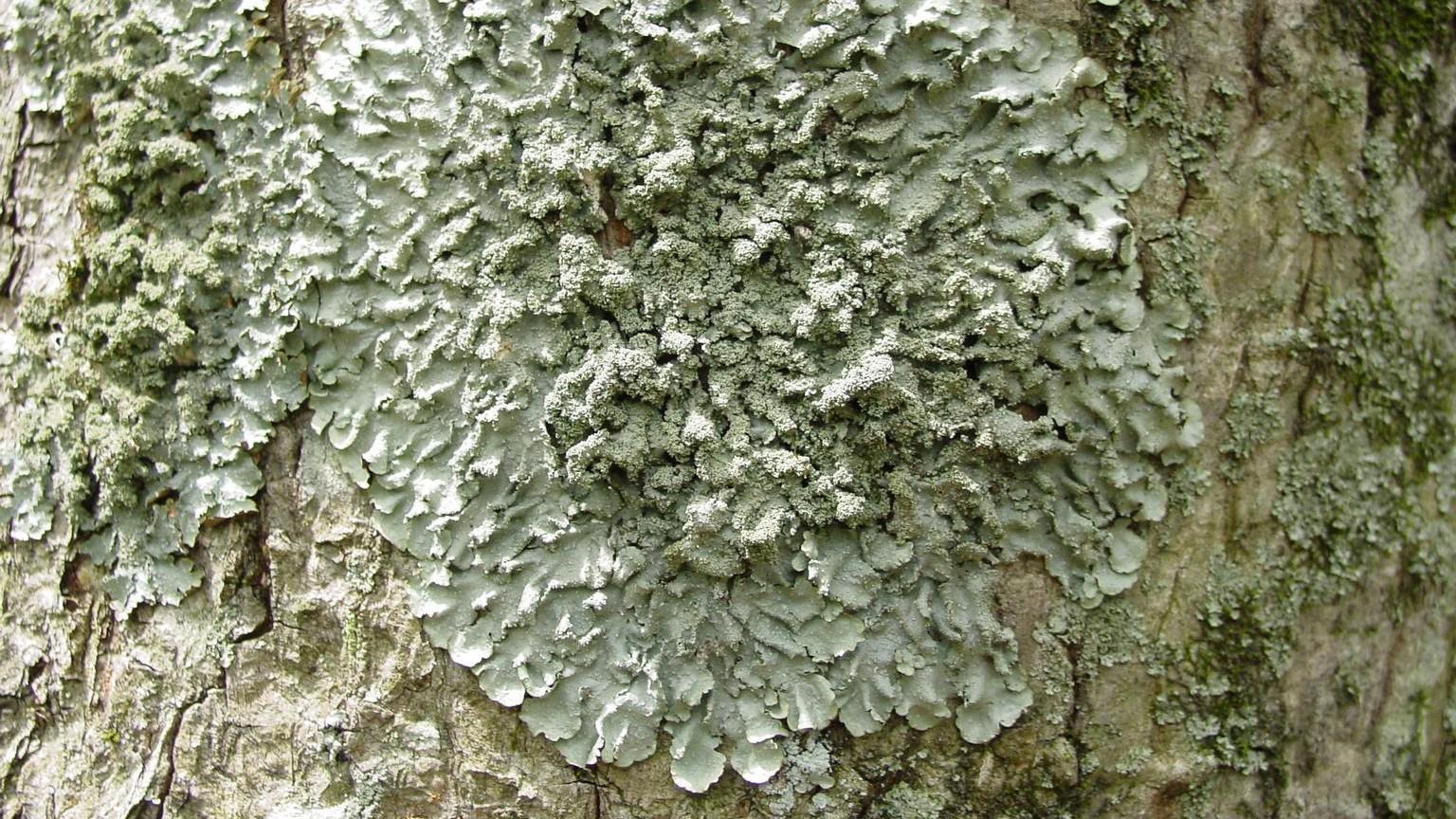
Common greenshield lichen. Photo: Anita Rose, USDA Forest Service, Bugwood.org
Lichen identification and biological science
There is a lot to be said for but enjoying the natural dazzler of lichens without trying to label them. However, lichens are easier to place, at to the lowest degree to the family level, than y'all might recollect.
If you can distinguish soil, rock and tree bawl, you are off to a running offset. Different lichen species specialize in growing on these three types of substrate, and so this is an important outset clue to a lichen's identity. Hunting for lichens in the winter is facilitated by the full general lack of foliage, making blank soils, stone outcrops, and tree trunks more visible than usual. Every bit a special bonus, storms litter the basis with lichen-encrusted branches, revealing treasures that would normally be above our reach. Even pocket-sized branches can host several species, each with its own unique colour and shape.
Body shape is another inkling that is easily understood by beginners. Lichens occur equally either:
- Powdery, crusty colors on surfaces, reminiscent of spray paint.
- Flat leafy shapes, usually rounded in outline.
- Iii-dimensional shapes reminiscent of shrubs, beards, cups, etc.
Color is another like shooting fish in a barrel taxonomic clue, and it is during gray, wet conditions (typical of March) when lichens are most colorful. During dry spells, lichens shrivel upward and their surfaces go opaque and faded-looking. This protects the internal, photosynthesizing algae from desiccation. When re-moistened, lichens expand and their surfaces become transparent again. Low-cal and moisture can reach the internal algae, and photosynthesis resumes. The algal colors, which are often brighter than that of the fungal surface, shine through.
Lichens produce special structures for dispersing their progeny, and these result in interesting changes in shape, texture and color which are further clues to a lichen's identity. The reproductive lives of lichens are unique, involving asexual methods, as well equally sexual reproduction of the fungal symbiont. As with many things botanical, these structures accept intimidating names like insidia, soredia, and apothecia. Fortunately it is not necessary to remember the names of the dispersal structures to utilize them successfully every bit taxonomic clues.
The life cycles of many native animals are intricately tied to lichens. Here are a few examples from animals native to Maryland:
- Reddish-throated hummingbirds line their nests with strips of lichen.
- Painted lichen moth caterpillars can just consume lichens.
- The green leuconycta protects itself from predators past looking similar lichens.
- A predator, the behemothic lichen orbweaver camouflages itself against lichens.
Lichens also take many other stories to tell, intertwining their presence in nearly all aspects of environmental and human being endeavour. Here are only a few examples that illustrate their importance:
- Approximately eight% of terrestrial earth is covered by lichens.
- Lichens absorb nutrients from the air, and can be used as air quality indicators.
- Lichens contribute nitrogen and minerals to the ecosystems in which they occur.
- Historically, humans have used various species of lichens to make dyes and medicines.
- Lichens produce unique biochemicals to fend off herbivores, forestall freezing, and cease seeds from germinating in their soft, moist tissue. These chemicals hold hope for the development of new medicines and agricultural chemicals.
Boosted resources
Accept a photo tour on theMaryland Biodiversity Project website. Click on the icon for thumbnail images, and and so click on the icon for slideshow.
Lichens of the Northward Woods: A Field Guide to 111 Northern Lichens by Joe Walewski is an affordable field guide for beginners. The introduction includes a very readable overview of lichen ecology, reproductive biology, and human uses. A simple organisation of iii substrates and iii basic shapes allows you lot to quickly first keying out lichens.
Lichens of North America, by I. Brondo, S.D. Sharnoff, and S. Sharnoff is a big, beautiful flick volume. It contains in-depth descriptions of lichen biology and a detailed key to the 3600 species found in North America.
Sara Tangren, Ph.D., former Agent Associate, University of Maryland Extension, contributed to this folio.
Source: https://extension.umd.edu/resource/lichens
Posted by: kittrellkitn1938.blogspot.com
0 Response to "Is Lichens A Plant Or A Animal"
Post a Comment